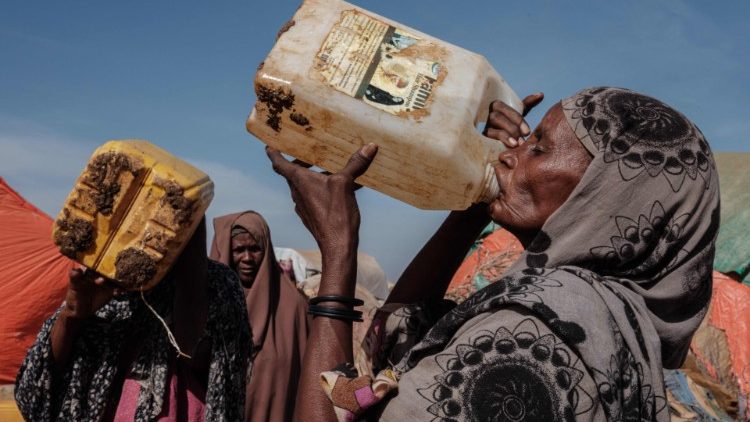
The United Nations has raised alarm over the worsening humanitarian crisis in Somalia and insufficient aid, noting that millions, including nearly two million young children, could face acute food insecurity in early 2026.
By Sr. Christine Masivo CPS Somalia is facing a devastating humanitarian crisis, as 6.5 million could face acute food insecurity during the first three months of 2026, warns the United Nations. This is according to new projections by the Integrated Food Security Phase Classification (IPC). According to the Vatican’s Fides news agency, the vulnerable include 1.8 million children under the age of 5, with nearly half a million already suffering from acute malnutrition. A third of the nation's 19 million people are classified in phase 3 acute food insecurity, while 4 million have reached phase 4, which is considered an emergency level. The data currently classifies Somalia as dangerously close to a catastrophic level. Climate shock The hunger crisis follows a severe drought that struck during the second half of 2025, abruptly ending a two-year rainy period that had provided partial relief from famine. Earlier in 2025, approximately 3.4 million people were affected by acute food insecurity, and the numbers are rising very fast. Central and southern regions, where agriculture and livestock sustain livelihoods, have been severely affected. Herders, subsistence farmers, and internally displaced persons remain the most affected groups, while northern regions have experienced comparatively less devastation. The worsening emergency of climate is not the only issue because the persistent jihadist violence and political instability continue to disrupt livelihoods and humanitarian access, undermining recovery efforts. Surging prices of imported goods have made them impossible for many families to afford. Meanwhile, international assistance has declined sharply. In January, only 17% of those in need received aid, and more recent data indicates that 9% have been reached. Government response and urgent call for aid In response to mounting concerns, government officials recently convened meetings in Mogadishu to explore strategies to combat the worsening food crisis. Representatives from the Prime Minister’s Office, the Ministry of Education and Culture, and the Disaster Management Agency (SODMA) participated in discussions aimed at strengthening the national response but produced no comprehensive solutions. Observers note that the proposed measures appear insufficient given the magnitude of the emergency. Mahmoud Moallim Abdulle, director of the Disaster Management Agency, has since appealed to citizens and the Somali diaspora to provide financial support for drought relief efforts. His call underscores the urgent need for both domestic solidarity and renewed international engagement. Somalia grapples with overlapping crises, including threats to national cohesion, and the humanitarian situation could prolong the crisis.